Direct factory procurement guide for industrial silicone sealants and construction acrylic mastics in commercial volumes...
The market for sealants and construction adhesives is one of the most sensitive areas of distribution for engineering tools and materials. Precise selection between Acidic silicone adhesive (Acetoxy)not Neutral construction and mirror silicone (Neutral Alkoxy) and Siliconeized acrylic sealantsis a fine line between an industrial lifetime seal and significant construction damages (such as blackening of mirror mercury, rusting of galvanized sheets, or cracking of joints). Estehkam, as a specialized manufacturer of various silicone and acrylic-based sealants, has developed this reference guide for wholesalers, tool and hardware warehouse managers, facade engineers, and workshops for glass, mirrors, and double-glazed doors and windows.
1. Chemistry of silicone sealants and vulcanization mechanism (RTV Silicone)
Silicone adhesives are formulated based on polydimethylsiloxane (PDMS) polymers. These compounds belong to the category of room temperature vulcanizable silicones (RTV-1); meaning that after exiting the cartridge, they form cross-links upon contact with the relative humidity of the air (Moisture Curing) and transform from a gel-like paste into a highly flexible and durable rubber elastomer. Two critical factors in determining the factory quality of silicone are:
- Percentage of pure polymer silicone: The use of 100% pure industrial silicone oligomers without cheap volatile diluents prevents shrinkage and the sealant from becoming dry and brittle under direct sunlight and UV exposure.
- Catalyst and curing system: Adjusting the skin formation time and curing speed so that the execution expert has the opportunity to finish and polish the joints.
2. Technical and structural comparison: Acidic silicone vs. neutral silicone
The most common mistake in construction and workshop projects is the unaware use of acidic silicones instead of neutral silicones:
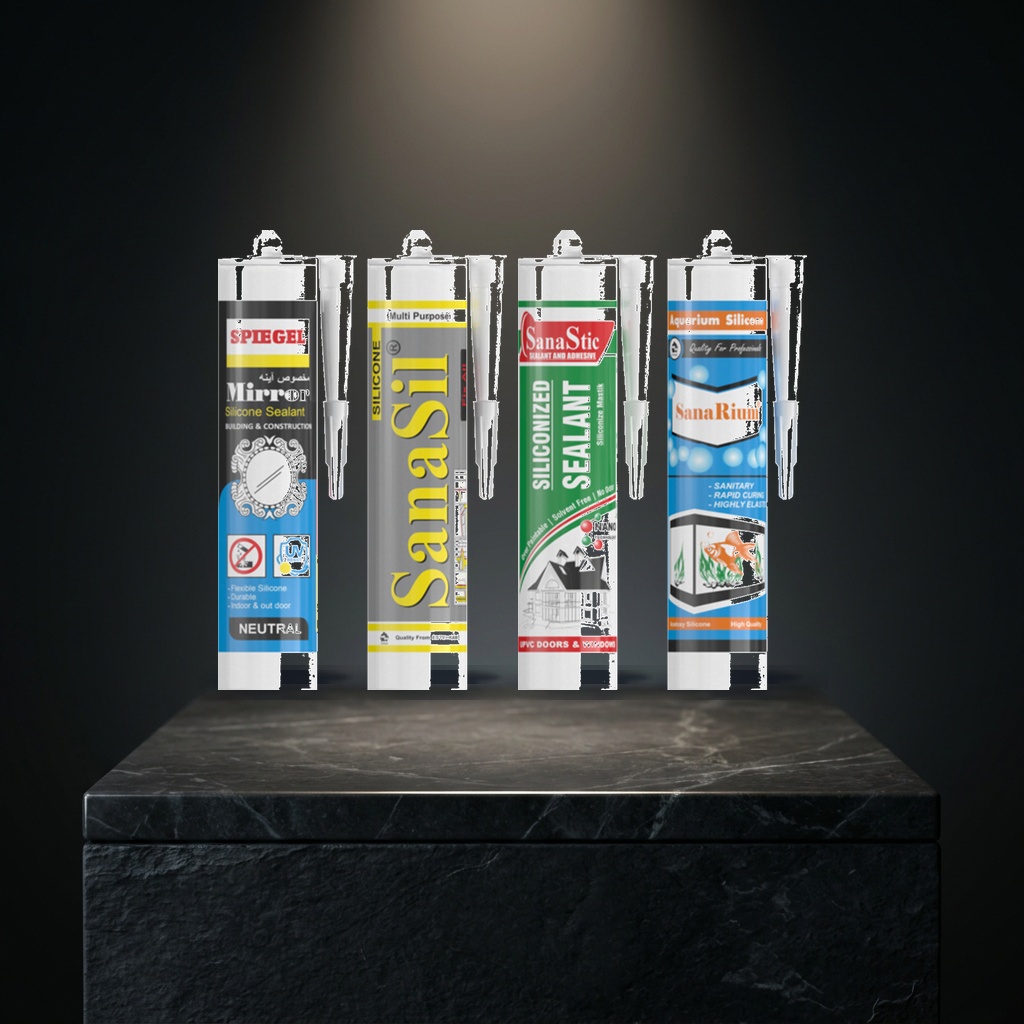
a) Acidic silicone adhesive (Acetoxy Cure) – like SanaSil
This curing system releases acetic acid (the agent of the sharp vinegar smell) during its reaction with environmental moisture. Its main characteristics include:
- Exceptional adhesion to non-porous surfaces: Very strong molecular bond with glass, glazed ceramics, tiles, anodized aluminum, and porcelain.
- High resistance in humid environments: Ideal for sealing bathrooms, kitchen sinks, and edges of display glass.
- Usage limitations: Should never be used on mercury-coated mirrors, sensitive uncoated metals (copper, brass, iron, and zinc), and cement or concrete materials, as the released acid causes oxidation and corrosion of metals and reacts with the alkalinity of concrete.
b) Neutral silicone adhesive (Neutral Cure / Alkoxy & Oxime) – such as Spiegel
There is no acid in the formulation of neutral silicones, and the product releases alcohol or non-corrosive compounds during curing.
- The only engineering choice for mirror installation: Behind mirrors, there is a sensitive layer of silver nitrate or mercury along with protective layers. Acidic adhesives decompose mercury within a few months, creating dark and black spots on the mirror surface. Neutral silicone adhesive SPIEGEL (Spiegel) is exclusively processed with a neutral structure to avoid any damage to the back of the mirror and create an exceptionally strong elastic bond with walls and wood.
- Complete compatibility with composites and modern facades: Seamless bonding with galvanized metals, building stones, UPVC frames, and aluminum panels without causing stains and erosion.
3. Specialized aquarium adhesives and high-pressure water structures: SanaRium
The construction of home and industrial aquariums or water-sealed glass chambers requires a significantly different standard:
- Hydrostatic pressure tolerance: In deep aquariums, the pressure from the underlying layers of water exerts considerable tensile force on the seams. SanaRium has a high modulus of elasticity and reinforced tensile strength to prevent the separation of glass walls.
- Ensuring the health of aquatic life (Non-Toxic): Common adhesives contain fungicides and biocides that, after prolonged contact with water, introduce toxic compounds into the tank and harm living organisms. SanaRium is free from harmful substances and delivers completely clear, toxin-free water after full curing.
4. Acrylic sealant mastics (SanaStic and SanaFix); practical differences from silicone adhesive
Many manufacturers are unaware of the differences between silicone adhesive and acrylic sealant mastic. While silicones are based on synthetic siloxane resins and are primarily waterproof and elastic, sealant mastics are produced based on water-based acrylic emulsions:
- 100% paintability: Paint cannot be applied to silicone adhesive, and paint on it tends to peel. However, acrylic sealant mastics such as SanaStic and SanaFix absorb various types of plastic, acrylic, and oil-based construction paints after full curing.
- Special application in drywall and plastering: Sealing between drywall, wooden door frames, longitudinal cracks in ceilings, side seams of moldings, and connections of suspended ceilings is beautifully accomplished with acrylic mastic and then uniformly painted with the wall.
- Siliconeized formulation: The siliconeized mastics from Estehkam have a combination of acrylic resin and silicone polymer that significantly enhances the product's elasticity and flexibility against vibrations and thermal expansion-contraction.
Technical comparison table of laboratory indicators (TDS) for Estehkam sealants
5. Advantages of purchasing sealant cartridges directly from Estehkam for wholesalers
Bulk purchasing from the Estehkam factory offers numerous benefits for wholesalers, tool distributors, and organizations:
- Guarantee of industrial formulation authenticity: Estehkam uses standard raw materials and international grade A that do not experience oil and gel phase separation in the cartridge.
- Volume stability and high-volume cartridges: Standard injection of 280 to 300 milliliters without creating deceptive air bubbles inside the cartridge, which maintains the trust of the end customer.
- Industrial resistant packaging: Sturdy 24-piece export cartons suitable for long-haul transportation and multi-level storage in warehouses.
- Competitive profit margin and factory gate pricing: Elimination of intermediaries allows for the highest volume discounts and cash and seasonal bonuses for provincial distribution representatives.
Frequently Asked Questions for bulk buyers and wholesalers (FAQ)
Can ordinary silicone adhesive be used for mirror installation?
No; ordinary silicone adhesives are acidic, and the acetic acid released severely oxidizes the silver nitrate and mercury coating behind the mirror, leading to the formation of black spots on the mirror surface over time. For mirror installation, only neutral silicone such as Sana Bond should be used, which does not react with mercury.
What is the main difference between acrylic sealant and silicone adhesive?
Acrylic sealants, such as Sana Stick, are water-based and are fully paintable after drying, making them an excellent option for sealing drywall, plaster, and door and window frames. In contrast, silicone adhesives have higher elasticity and moisture resistance but are not paintable at all.
What are the storage and warehousing conditions for sealant cartridges in a wholesale warehouse?
Silicone and sealant cartridges should be stored in a dry and cool environment, away from direct sunlight, and within a temperature range of 5 to 25 degrees Celsius. Vertical stacking of cartons and adherence to inventory rotation (FIFO) helps maintain the adhesive's quality until the expiration date.
Inquiry for high-volume pricing and obtaining sales representation for Estehkam's sealants
To place a bulk order for Spiegel silicone adhesive, Sana Bond, Sanarium, and various acrylic sealant mastics, receive a sample, industrial catalog, and inquire about the factory gate cooperation price list, please contact the central sales office of Estehkam:
Direct Factory Supply & Export Inquiries (Neutral Cure Silicone & Mirror Adhesive)
Estehkam Industrial Group manufactures and exports high-performance Spiegel Neutral Silicone & SanaSil Sealant under strict international quality standards. We supply master carton packaging and Full Container Loads (FCL) with competitive FOB and CIF terms.